
May is the month of literature par excellence in Galicia. And if there’s one thing we can boast about in Vilanova de Arousa, it’s that it’s a land of writers.
The most distinguished of these is Ramón María del Valle-Inclán, and to find out more about his life and work, we invite you to visit his House-Museum, located right in the historic heart of our town. But beyond the exhibition space itself, this place will surprise you with its uniqueness.
Here are 10 interesting facts about the Valle-Inclán House-Museum that you may not know:
1. Casa del Cuadrante: National Historic Monument
The building that houses the Valle-Inclán House-Museum is called Casa del Cuadrante. The great writer was born here on 28 October 1866. The building, located at the junction of Luces de Bohemia and Priorato streets, dates from the 16th century and has undergone several changes over the years. One of the most recent renovations took place in the mid-19th century, transforming it into a ‘large urban house’ for an upper-class family.
Before being acquired by Valle-Inclán’s maternal grandparents (Francisco de la Peña Cardecid and José Montenegro y Saco Bolaño), the property belonged to the Benedictine Priory of Vilanova de Arousa. During his childhood and part of his youth, the writer lived in the house, to which he also makes various references in his work. When the writer moved away from Vilanova de Arousa, he would visit the family home –where his cousins lived and had a room reserved for him– to spend certain periods there.
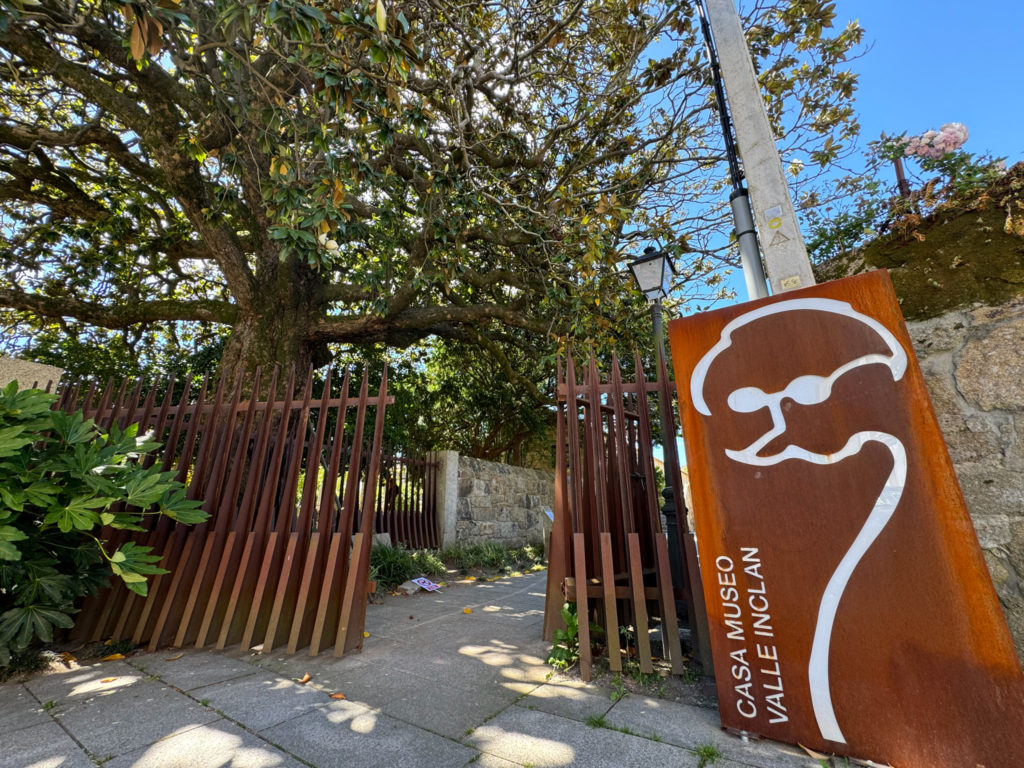
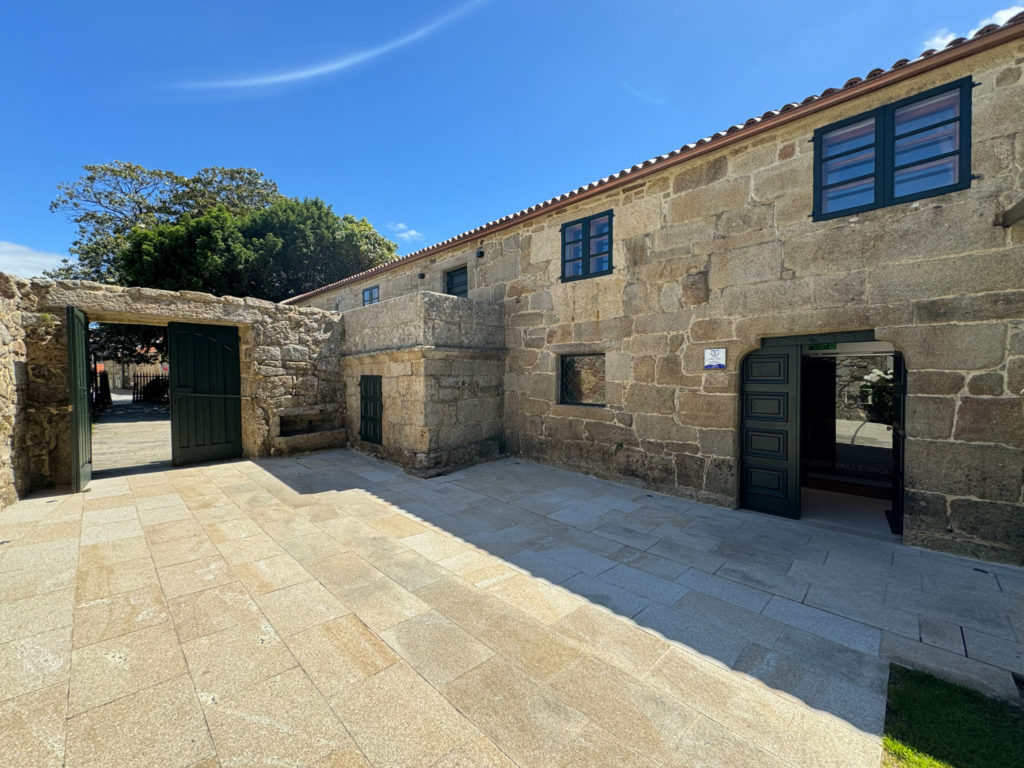
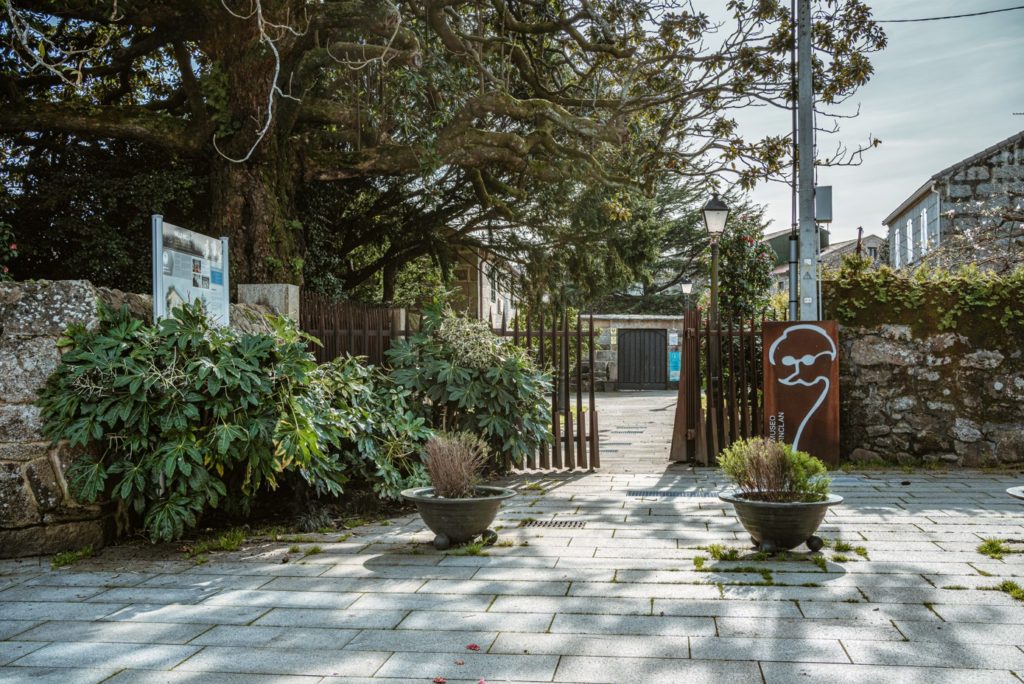
Given the uniqueness of the building and its significance, the Casa del Cuadrante was declared a National Historic Monument in 1976, under Royal Decree 249/1976 of 9 January. Despite its importance, the house gradually fell into a state of neglect, particularly in the early 1990s.
In 1994, the building suffered a devastating fire, destroying almost everything inside. Given the state of the property, a year later, Vilanova de Arousa Town Council decided to invest in this symbolic site by purchasing the property and carrying out a restoration of the building.
This established the basis for the creation of the Valle-Inclán House-Museum. This cultural centre has now been open to the public for over two decades and welcomes numerous visitors every year, making it one of the destination’s essential attractions.
2. The Outdoor Stairways, architectural features typical of Galicia
Another distinctive feature of the exterior of the Casa del Cuadrante is that it has two ‘patines’ (outdoor stairways). These are unique architectural features typical of Galicia: an external stone staircase providing access to the house, which may or may not be covered.
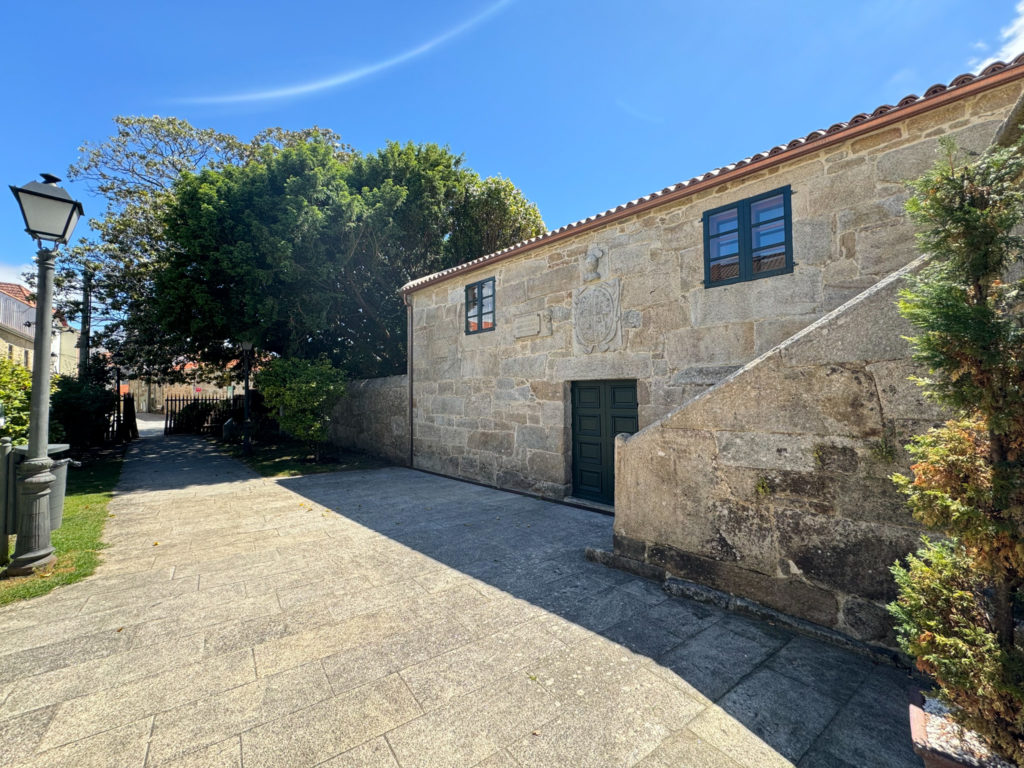
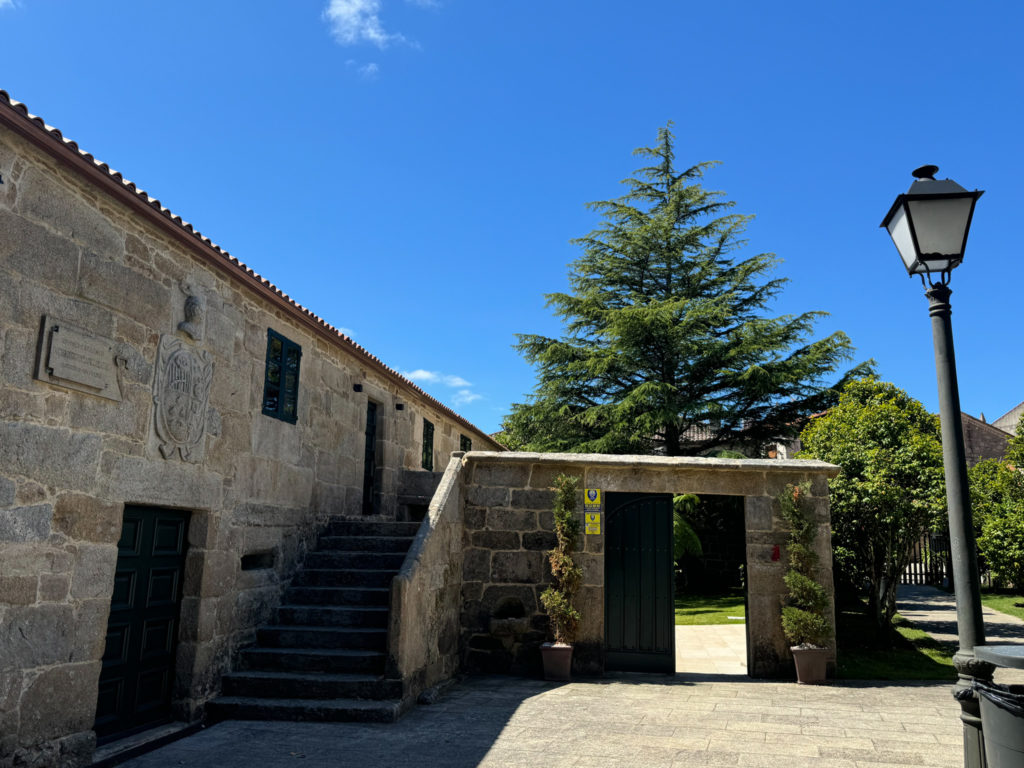
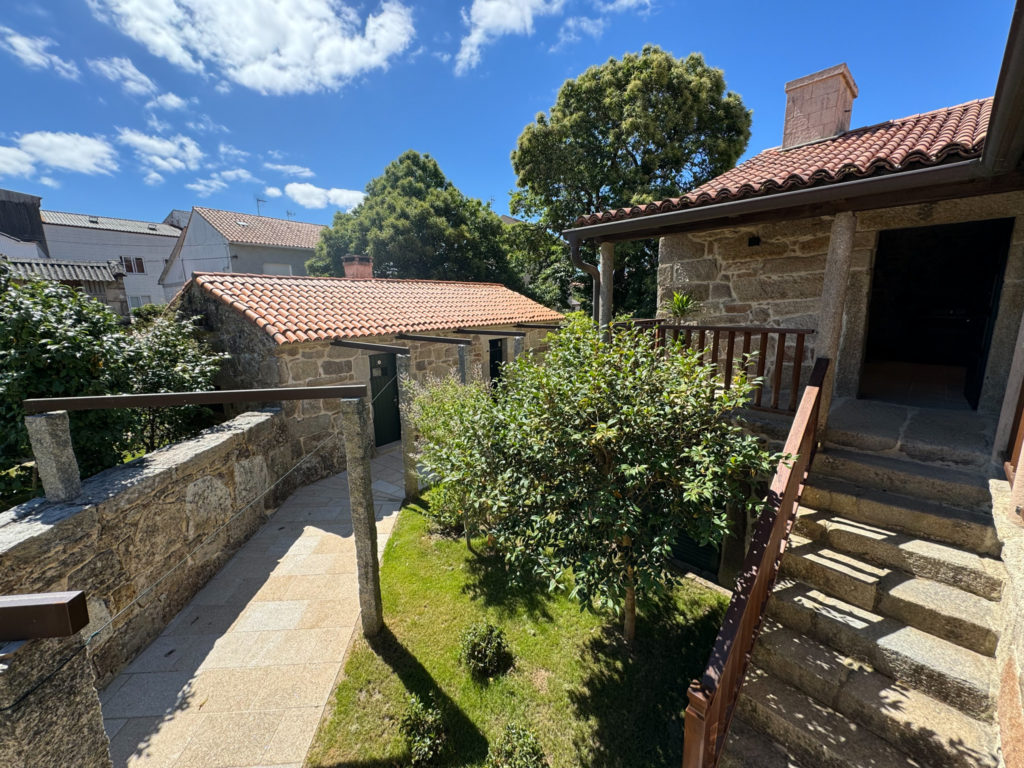
At the Valle-Inclán House-Museum, you will notice that it has two outdoor stairways: one on the main façade and another on the buttress. The latter is the most outstanding of both, because it is covered by an extension of the roof and enclosed by simple wooden balusters. As well as being a functional part of the house –ideal for drying clothes or ears of corn and broad beans, for sheltering from the heat in summer and carrying out other tasks– it was also a meeting place for pleasant chats.
This unique porch is also reflected in Valle-Inclán’s work. A very special part of the house that featured in several of his childhood memories.
3. The most iconic magnolia tree in Vilanova de Arousa
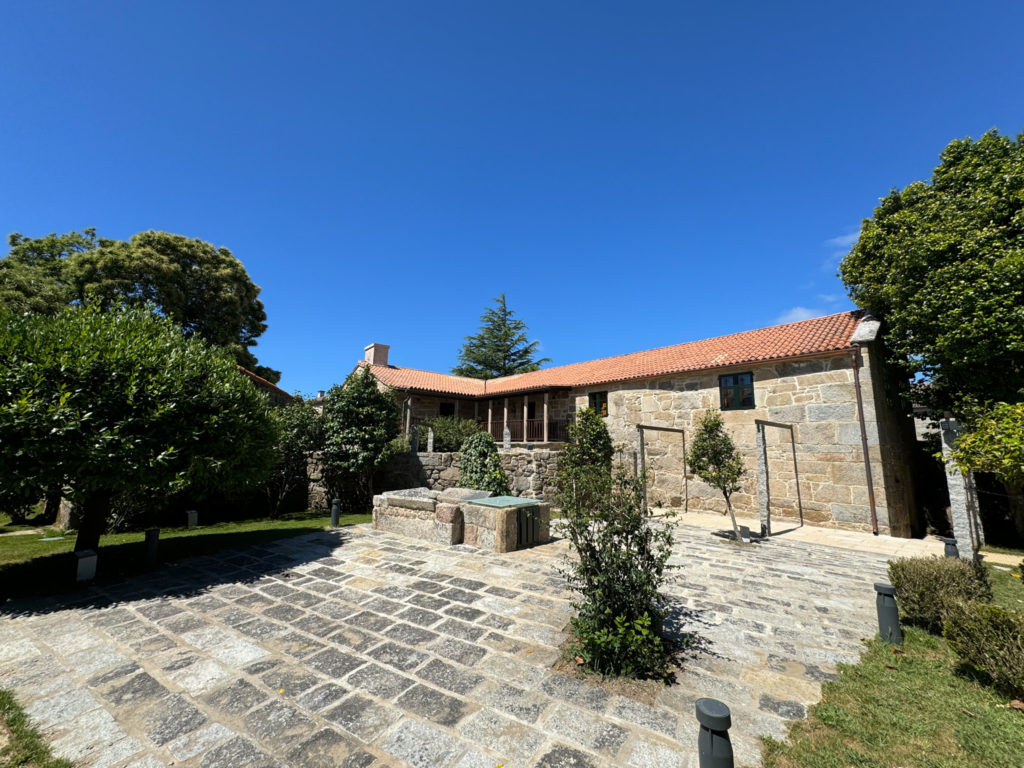
The exterior of the house is not merely decorative. You will be struck by its majestic garden, where you will find numerous unique specimens. Among them, a collection of old camellias (Camellia japonica and Camellia sasanqua), which also feature in Valle-Inclán’s work.
However, amongst the various botanical species, you should take note of one in particular: the ancient magnolia (Magnolia grandiflora) situated on one side of this beautiful garden. This tree, which has witnessed the many changes that the property –covering nearly 1,500 square metres– has undergone over the centuries, is one of the emblems of our destination. It is no coincidence that it features on the coat of arms of Vilanova de Arousa Town Council, alongside the Tower of Cálago.
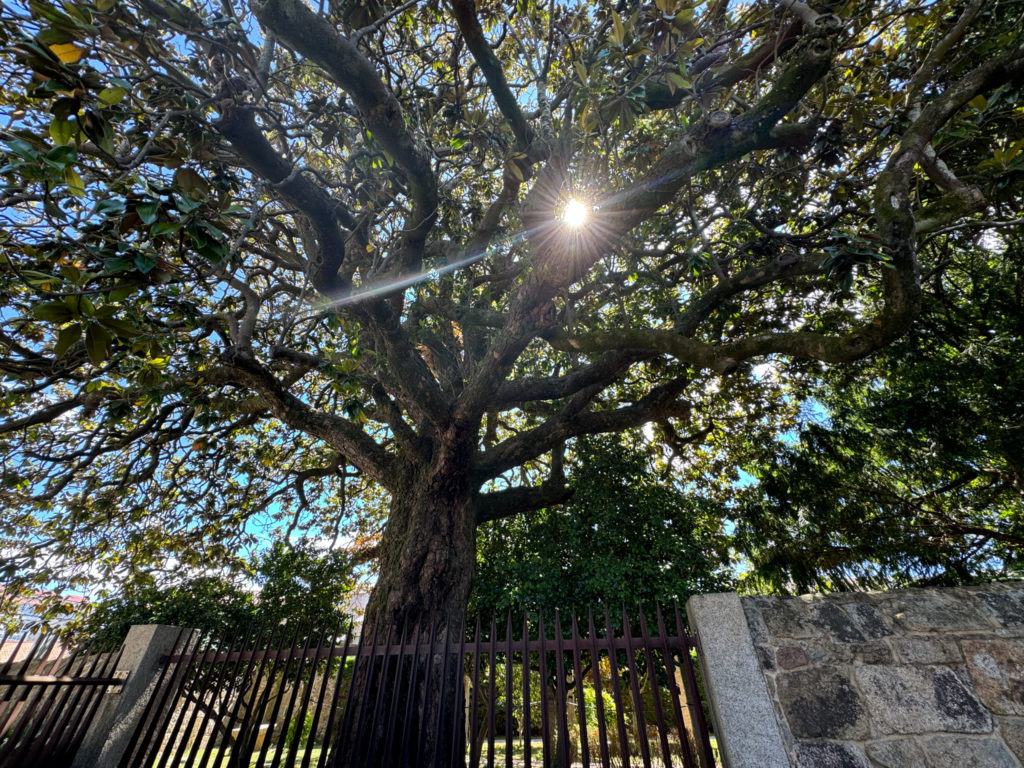
As well as being a part of the tour of the Valle-Inclán House-Museum itself, this unique garden is the ideal setting for a variety of activities and events, mostly of a social and cultural nature. In fact, until five years ago, the Gold and Diamond Badges were awarded here as part Mussel and Cockle Festival of Vilanova de Arousa.
4. The ground floor, the house’s heating system and the ventilation shafts
At the time Valle-Inclán lived there, the ground floor of the Casa del Cuadrante was the area used as stables. The writer spoke of them in an interview published in El Heraldo de Madrid on 13 March 1926. In it, he described how he liked “walking beneath the horses and cows, between their legs”.
The area was divided by partitions used to separate the different animals, including cows and horses. A small space on this ground floor was set aside for storing farming tools, as well as the cellars, where provisions were kept.
The animals in the stables acted as a natural source of heat for the rest of the house, especially on cold winter days. The warmth given off by the stables helped to regulate the temperature of the rooms on the first floor.
Another feature of the time, which can still be seen on the ground floor of the Valle-Inclán House-Museum, are the ‘bufardas’. These are small holes arranged at various points on the walls to aid ventilation in the room, acting as air vents.
5. First editions of works by Valle-Inclán
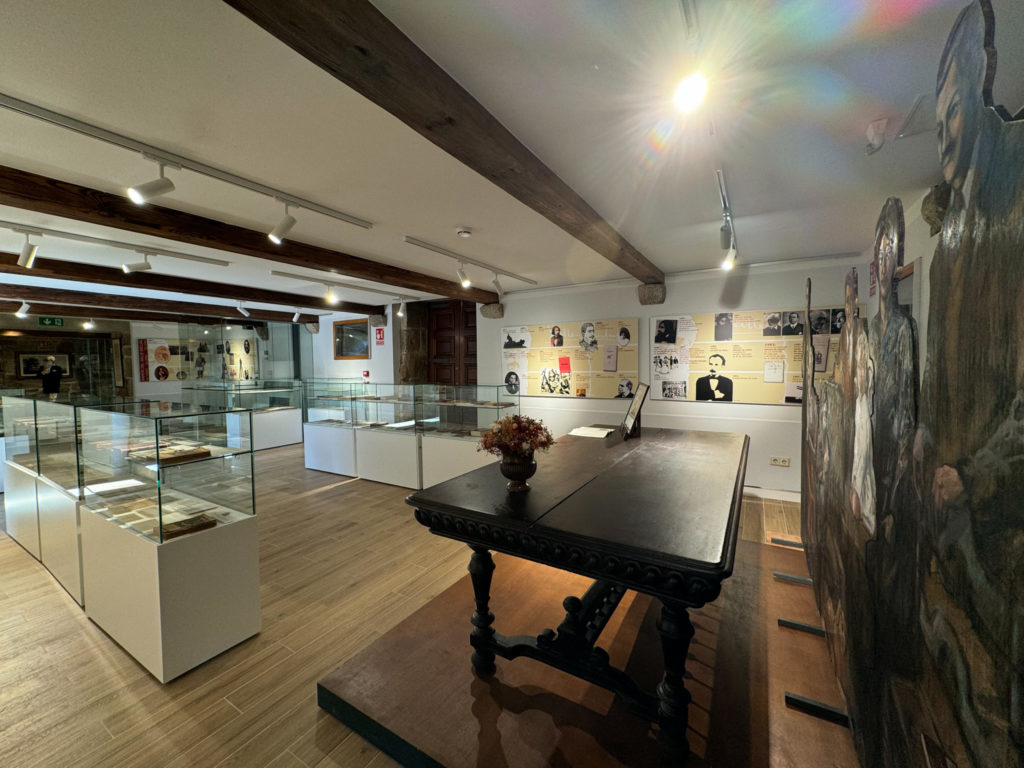
The ground floor of the building has now been transformed into a space that combines municipal facilities with one of the Vilanova de Arousa Tourist Offices, the reception area for the House-Museum and a spacious exhibition hall. Thus, the true heart of the Casa del Cuadrante beats for bibliophiles and lovers of mystery.
Upon entering, you’ll find an exhibition hall that is, in fact, a literary sanctuary. What are its greatest treasures? The showcases. Here you can see fifty or so first editions that sprang directly from the mind of the Manco de Lepanto. Among them, the following stand out: Sonata de Otoño (1901), Sonata de Estío (1903), Sonata de Primavera (1904) and the stories in Jardín Umbrío (1903). Incidentally, if you wish to discover the references Valle-Inclán makes to the house where he was born and lived during his childhood, you will find several in this last book.
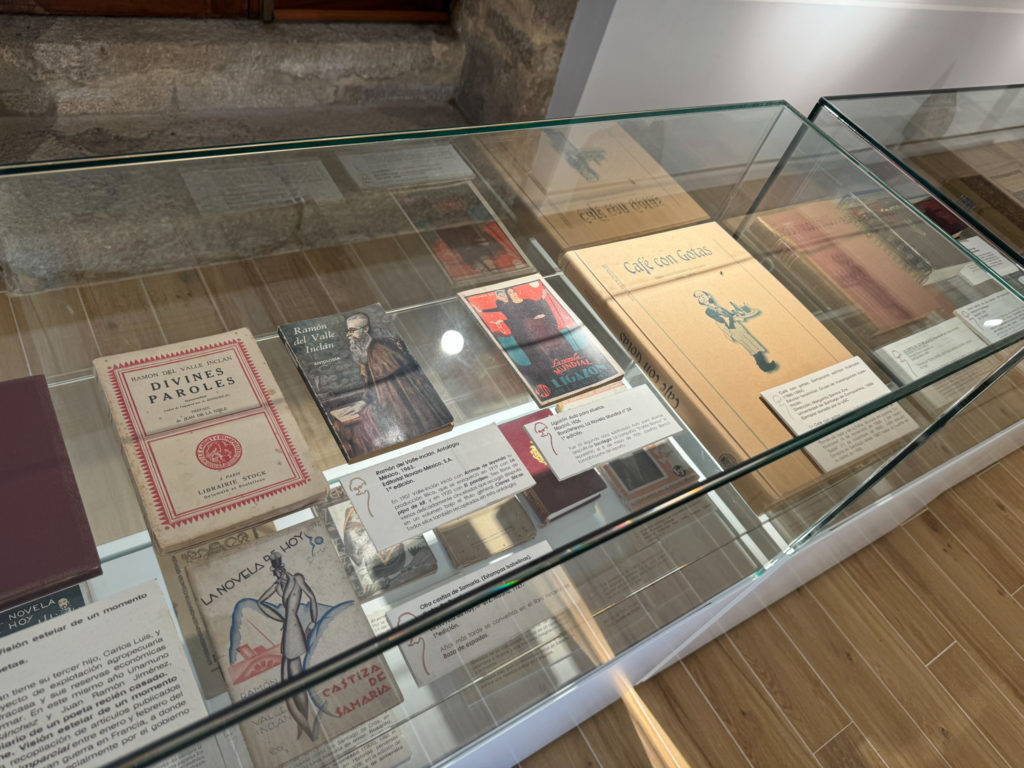
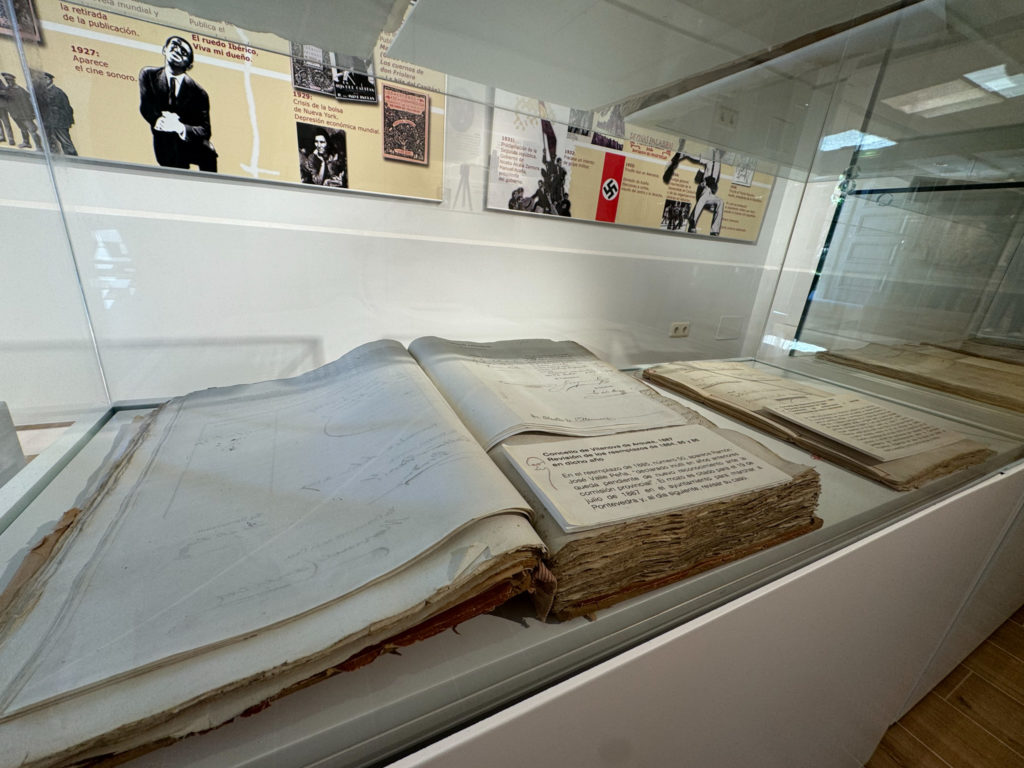
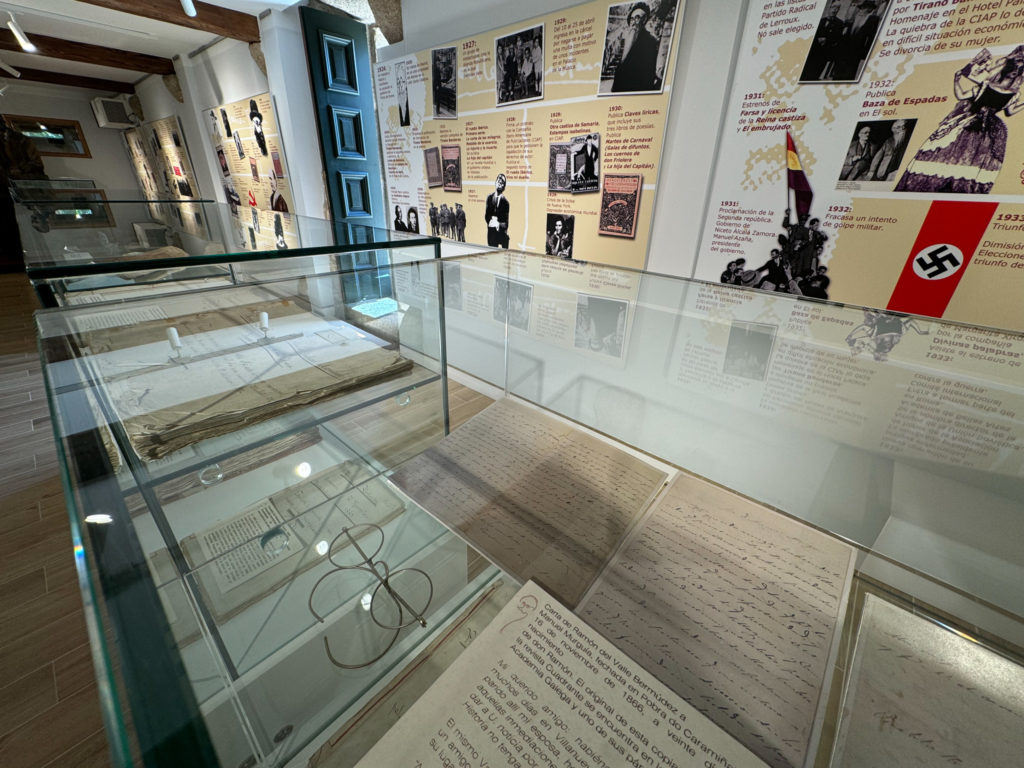
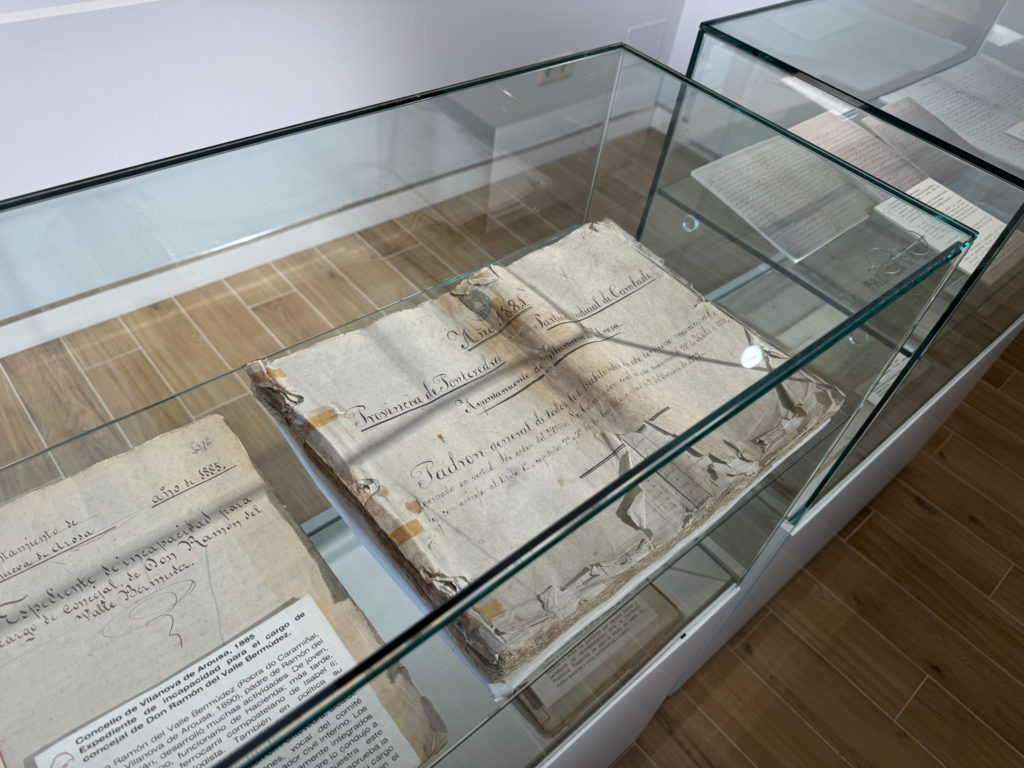
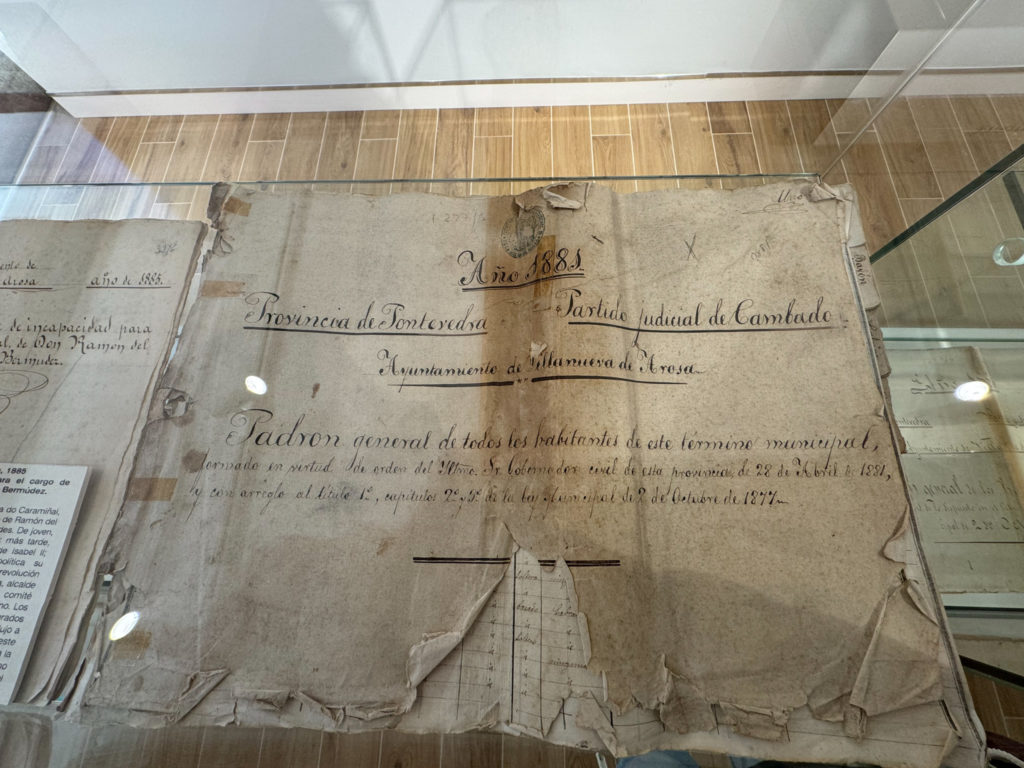
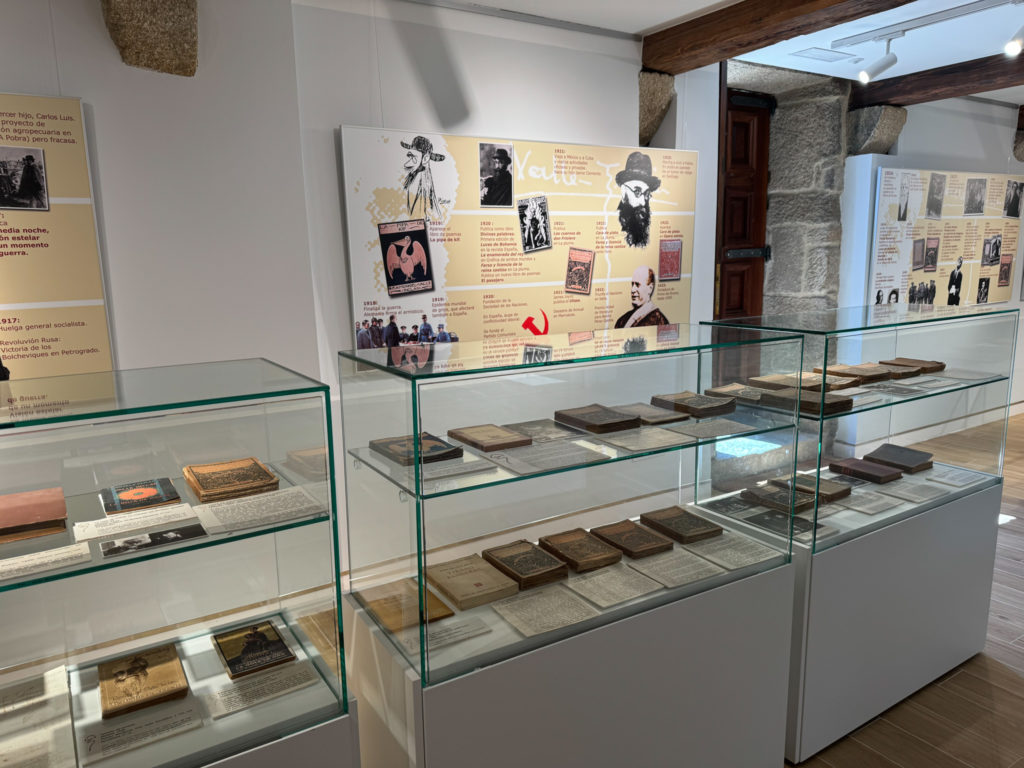
The unique copies in the display cases are complemented by titles such as Divinas palabras (1920), Luces de bohemia (1920) – the work in which Valle-Inclán’s characteristic esperpento was forged, that literary genre which distorted reality to reveal its true essence – and Martes de Carnaval (1930). All of this in a single space, complemented by other documents written by Valle-Inclán himself.
6. A journey into the aristocratic lifestyle of the early 19th century
A tour of the first floor of the Casa del Cuadrante offers a complete dive into the era. Here, the daily life of a 19th-century Galician noble family is faithfully recreated, allowing you to see the environment that shaped the author’s personality.
Thus, the upper floor of this museum space is not merely an object exhibition, but a time capsule. As you walk through it, you can see how the minor rural nobility, or hidalguía, lived in the early 19th century. The layout of the rooms, from the reception room to the bedrooms, reflects a social structure where appearance and culture were fundamental, serving as a real-life setting for many of the stories the author would later write.
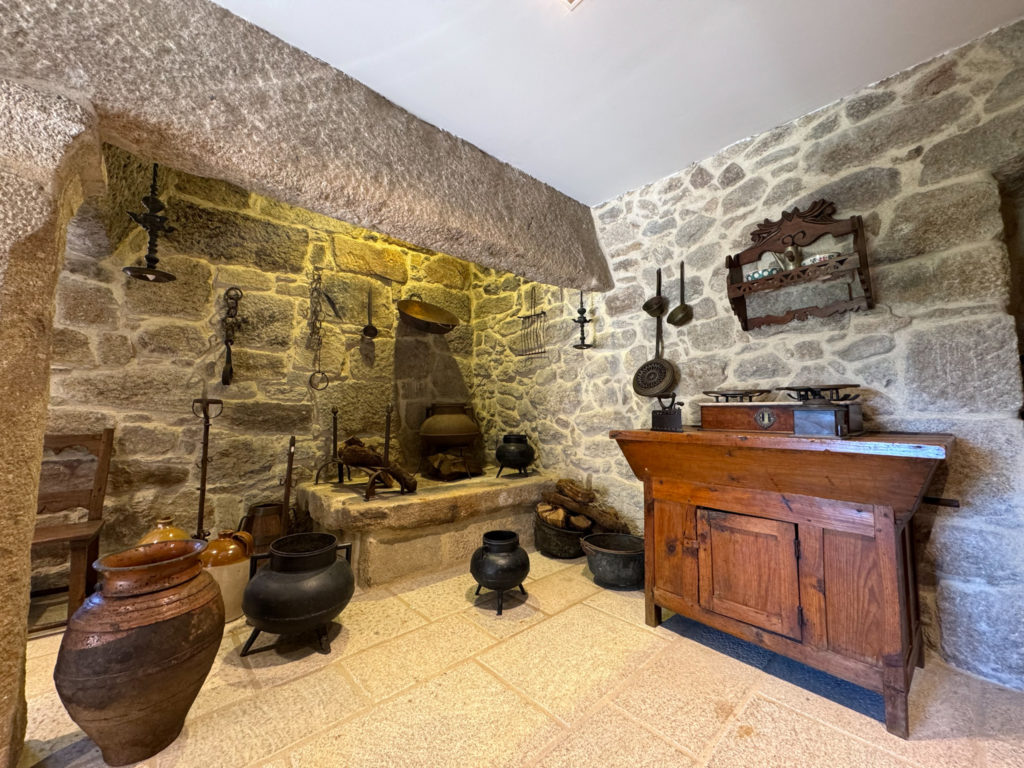
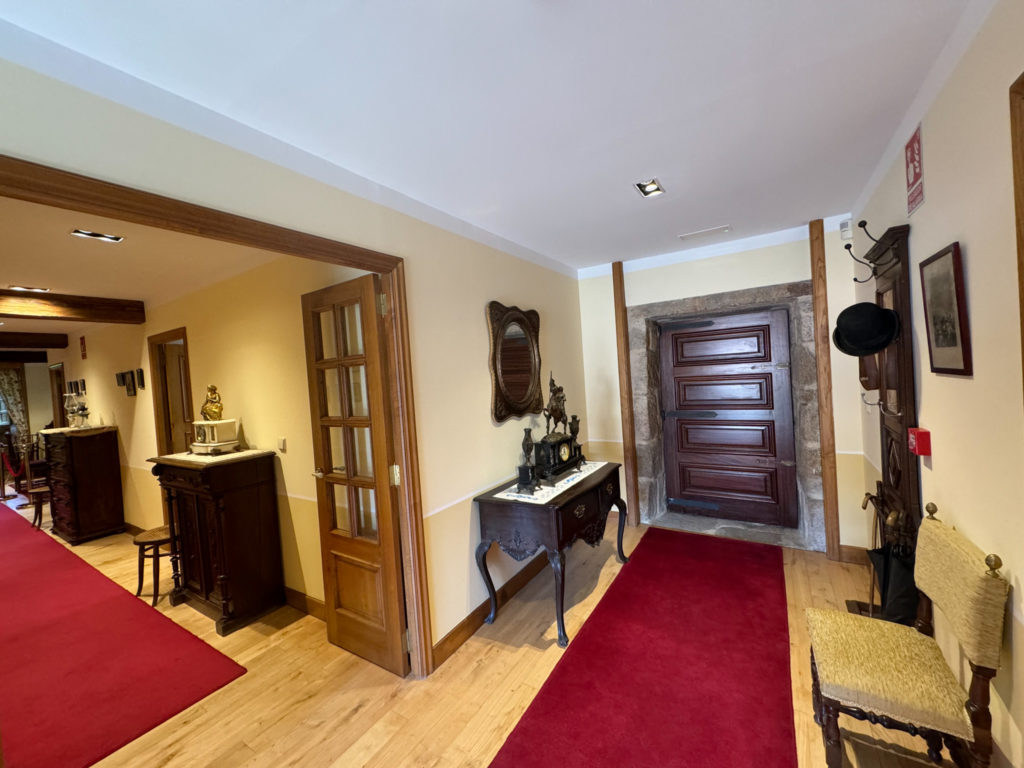
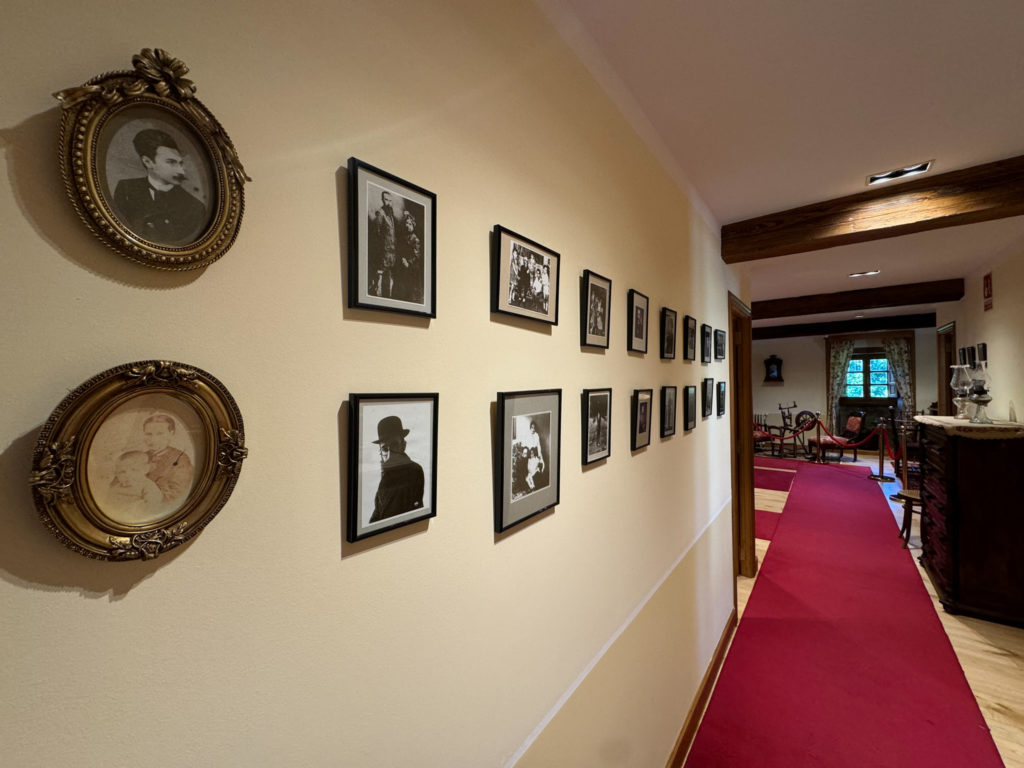
Among the most iconic spaces of this era is the kitchen, which was one of the central areas of the house. Not surprisingly, this was the meeting point between social classes, from the servants to the owners of the house. If you’ve ever heard of the Galician lareira, here you can see it in all its glory. You will also find a piece of furniture very typical of the period and still preserved in some homes: the artesa. This is a kind of wooden chest used to store food, the surface of which was used for kneading dough.
7. Recreation of the creative space
The upper floor of the Valle-Inclán House-Museum also houses a room that recreates a small study. It is designed as the kind of space for inspiration and writing that the literary genius might have used to give free rein to his gifted pen whilst creating his first novel, Femeninas.
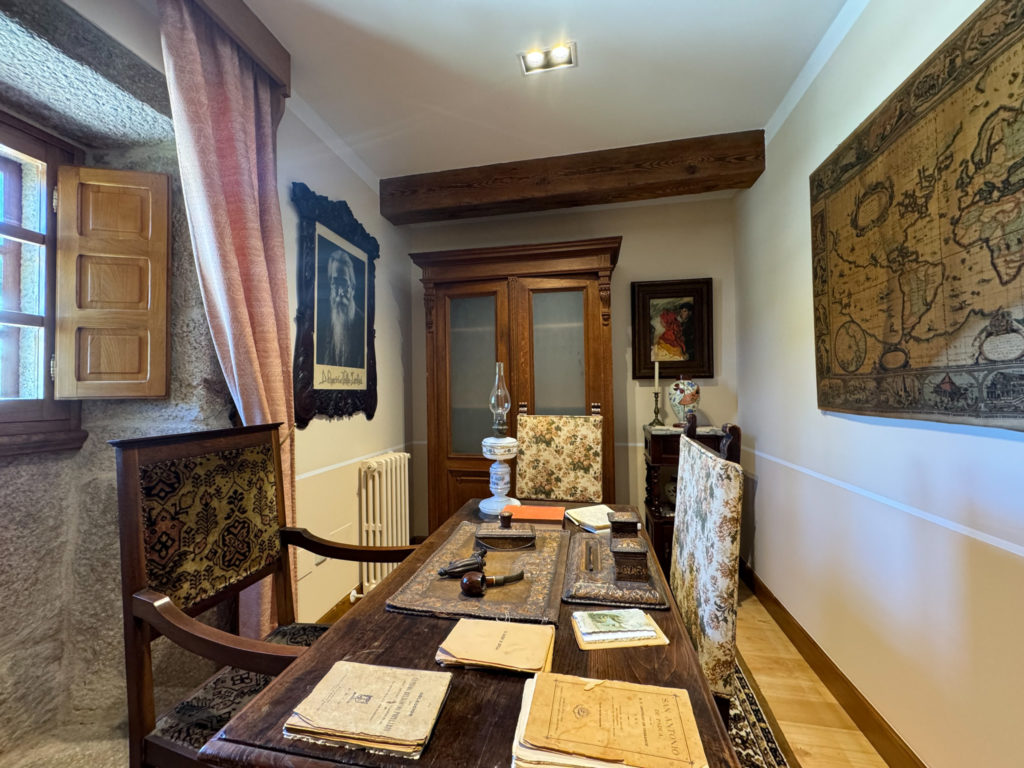
In addition to various manuscripts, a small collection of pipes will also catch your eye here. This is an item typically associated with images of Valle-Inclán and it also reflects the quality and originality of the cabinetry typical of the early 19th century.
8. Flexible spaces
Did you know that bedrooms were the only rooms in the house that could be altered? At the Valle-Inclán House-Museum you’ll find several bedrooms, but, above all, there is one that cannot be adapted: the master bedroom.
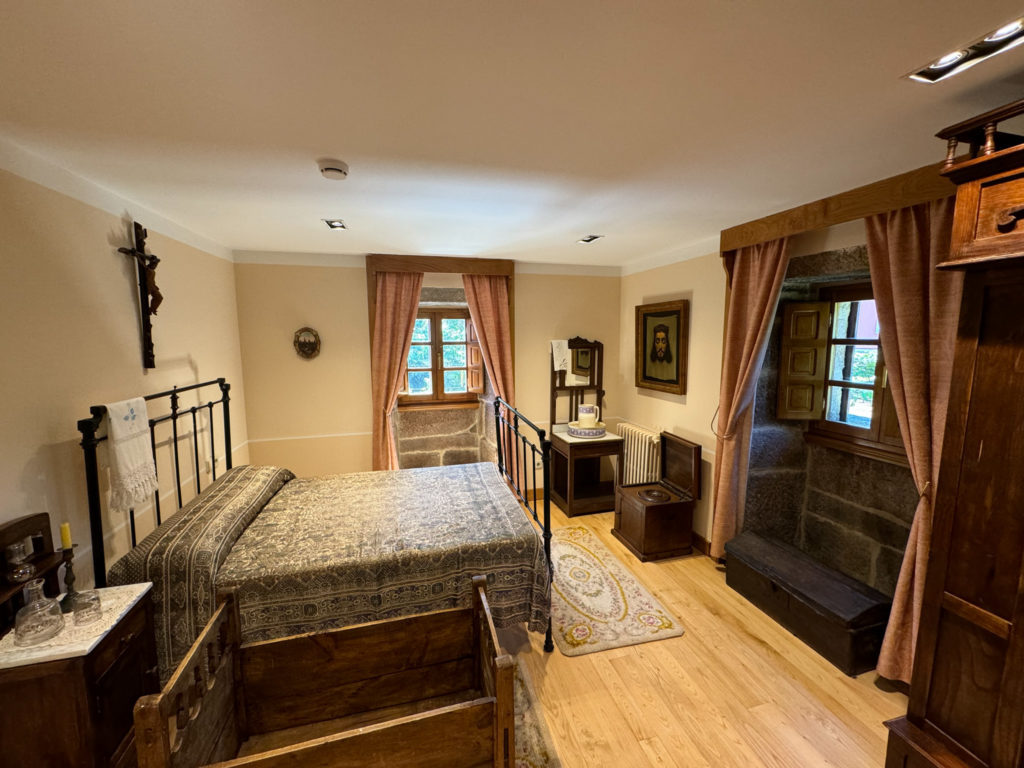
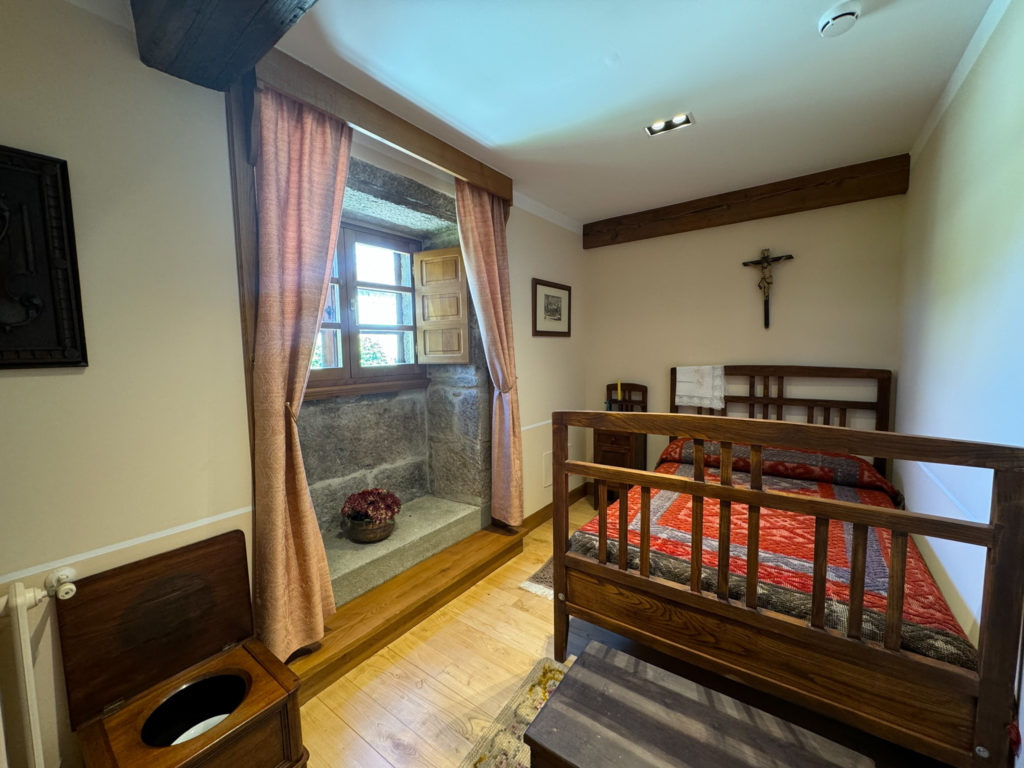
For the other rooms, partitions were installed to divide the larger spaces and convert them into smaller bedrooms. These changes were made as the family grew. In fact, in the specific case of the Casa del Cuadrante, the secondary bedrooms were arranged in a line parallel to the main façade of the house, and there were once up to two more than are currently on display.
9. A cinematic dining room
This room, regarded as the transitional space between the bedroom areas, was where breakfast, lunch and dinner were served each day. As you will see for yourself at the House-Museum, the layout was carefully designed to be both functional and comfortable.
However, what really makes this space special is the screening of an excerpt from the 1920s film La Malcasada, courtesy of the National Film Archive. In it, Valle-Inclán appears in Julio Romero de Torres’s studio posing alongside the actress María Banguer. This film is considered an audiovisual gem of the era for bringing together over a hundred personalities throughout it.
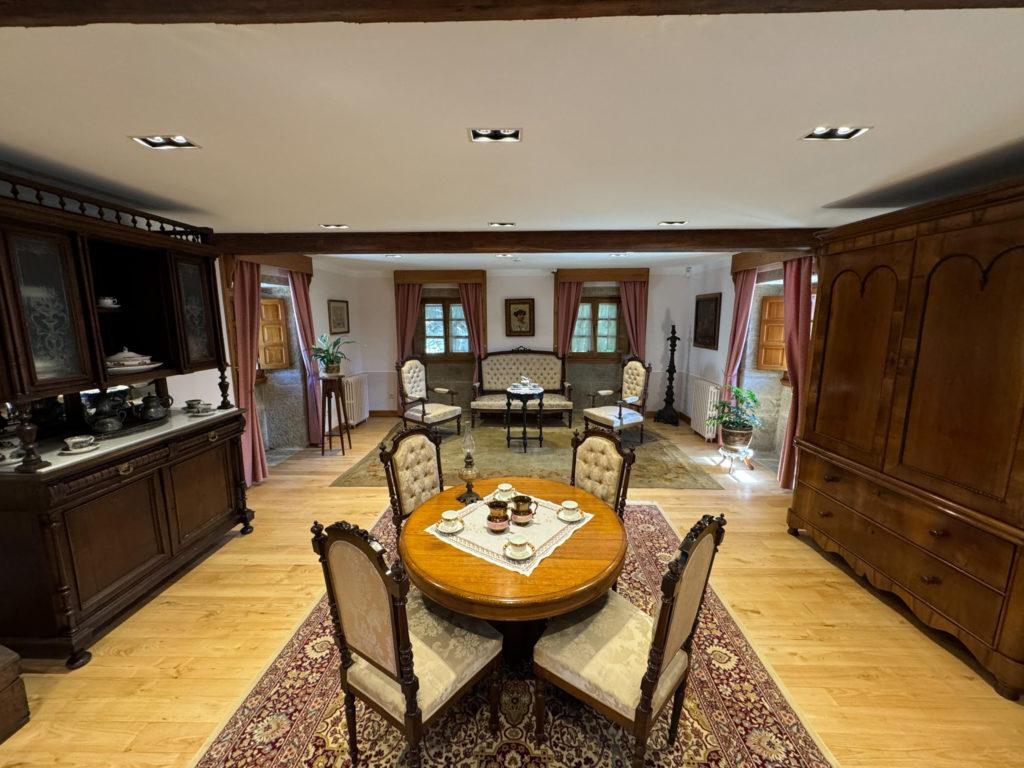
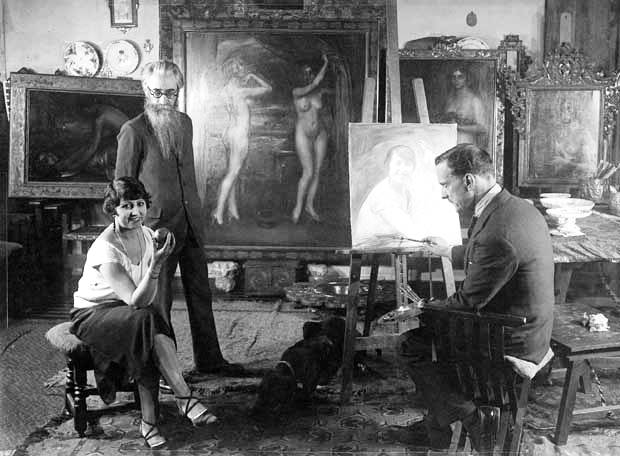
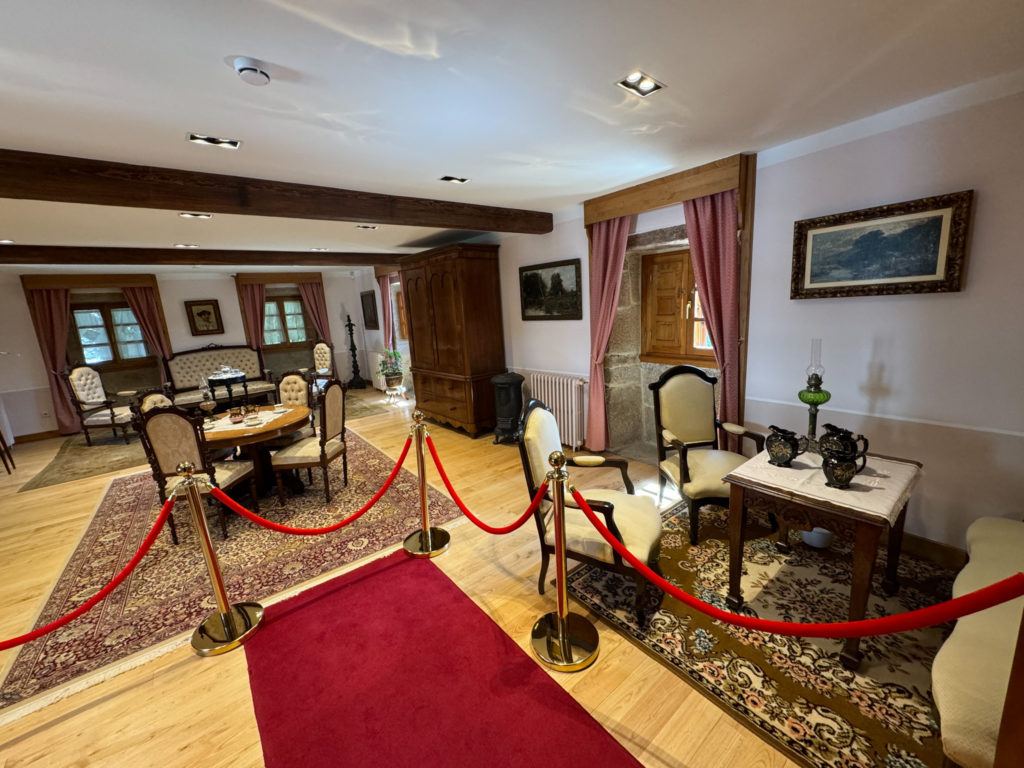
Once the sequence from La Malcasada has finished, you will be able to hear the voice of Valle-Inclán himself reading an excerpt from his famous Sonata de Otoño. This is a recording that the writer made in his day for the Archivo de la Palabra and which is available to you during your visit to the Valle-Inclán House-Museum in Vilanova de Arousa.
10. 2-for-1 en Culture
A handy tip for visitors is that a ticket to the Valle-Inclán House-Museum also grants access to the Camba Brothers’ House-Museum (Julio and Francisco), two other major literary figures who were born in Vilanova de Arousa. To visit, you must book in advance by calling 986 555 493 or emailing museos@vilanovadearousa.gal.
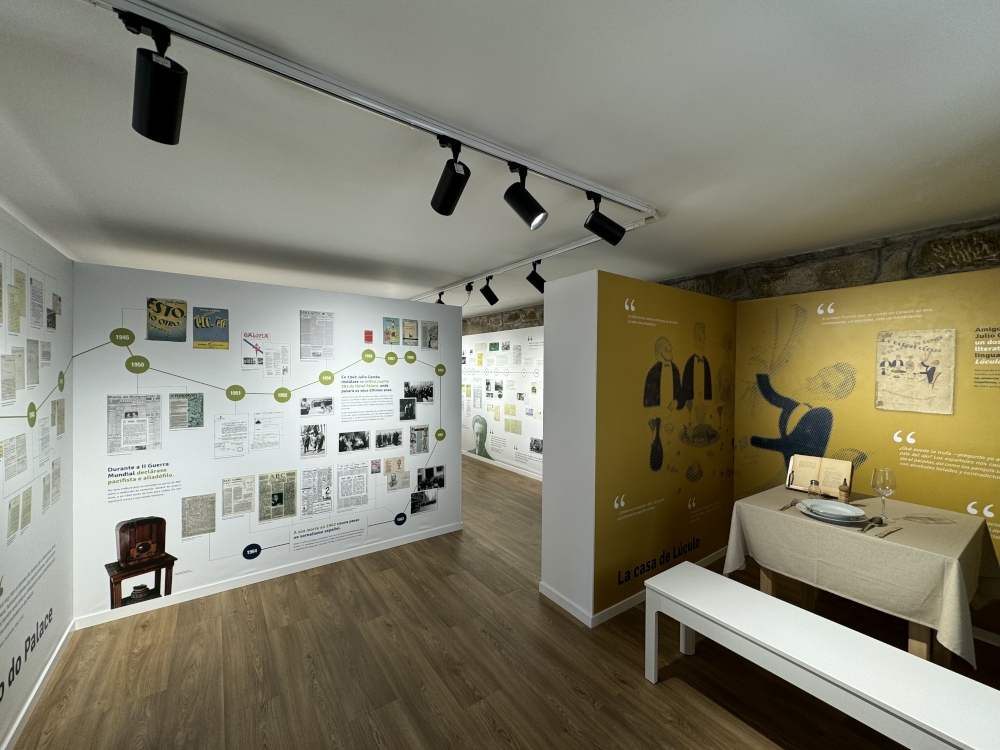
Furthermore, it is worth noting that Vilanova de Arousa Town Council offers guided tours and information in four languages (Galician, Spanish, English and Portuguese) at this museum. This demonstrates the international reach and enduring relevance of Valle-Inclán today.